
“There are three rules for writing the novel. Unfortunately, no one knows what they are.” ~W. Somerset Maugham
I mentioned here a few weeks ago the classic book of writing instruction The Elements of Style, by Strunk and White. In the face of everyone in the modern world who gets their writing rules online with one or two clicks from the AP or The Chicago Manual of Style, or Grammarly, or a program, I’m reading this little book, much like a novel, and for the same reasons–entertainment, enlightenment, and being warmed with good writing.
It’s a lot like reading a dictionary, and I have been known to do that, too. I even bought it in e-book, giving me the marvelous ability to be able to do a search when a question pops to mind, and in my hand on my phone. I credit (or blame, as the case may be) certain knowledgeable writers in my critique group, who have caused me to see the bad habits into which I have fallen with my writing. The book itself is encouraging. It has the firm and positive attitude that learning is available to all.
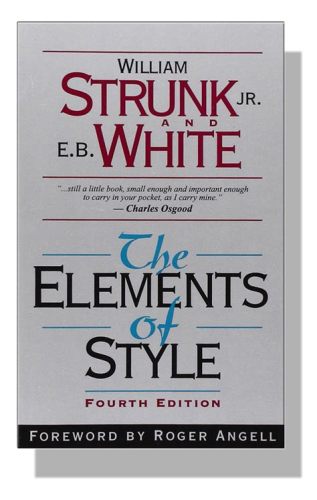
William Strunk Jr. writes on Rule 13: Omit needless words.
In his Introduction to the book, E. B. White said that Strunk felt so strongly about this Rule that he would say it three times: “Omit needless words! Omit needless words! Omit needless words!”
My heart constricted as I read that. My critique group keeps hammering that idea as a major rule. But I often like needless words, and sometimes needless ideas. I like the wandering and pondering and funny asides from characters in a book, and so do a few popular authors that I can think of: Alexander McCall Smith, Tarquin Hall, and Fannie Flagg.
There are, as I see it, a lot of seemingly needless words in life, and they are needed.
Then below Rule 13, the author clarifies: “This requires not that the writer make all his sentences short (thank heaven!), or that he avoid all detail and treat his subjects only in outline, but that every word tell.” In fact, there are long sentences in this little book that please me and make me smile.
“Let me live, love, and say it well in good sentences.” ~ Sylvia Plath
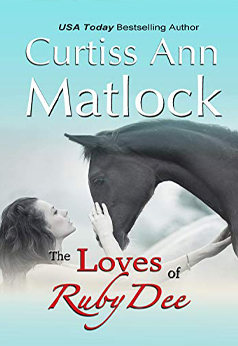
“The Loves of Ruby Dee held me, transfixed, through the entire read. Ruby Dee, with her dog Sally, her Aunt Edna’s ashes, and her need for healing, is a character who is not only engaging, but enigmatic, appealing, and above all, someone to root for. Curtiss Ann Matlock is one of my all-time favorite authors, and this book shows why.”
~ Amazon Review
Grace and Peace,
 Curtiss Ann Matlock